

Background
It is generally worth setting out the scene for the annual Budget, but there have been so many and whats, ifs and buts over the past weeks that it seems hardly worthwhile, especially since whole thing was pushed to public analysis even before the Chancellor stood up in the House of Commons. The major focus over the past year or so has been about the necessity for growth in the economy, although this seems to have recently overtaken by concentration on the Cost of Living. However, the reality is that it is growth which is needed to pay for the spending side of the economy. This growth was not looking positive, but in the last week the Office of Budget Responsibility upgraded its 2025 forecast, which was very welcome to the government and provided some wiggle room. However, the three years after this one were slightly downgraded, with an overall average growth which will wobble around 1.5 % pa through to 2030. This does not compare so well against the performance of previous years, but it is positive. We must also remember that the Chancellor has an overall economic target based on the next five years performance and the 2030 figures, so everything needs to be taken in context over this period, rather than looking at the immediate future.
The level of borrowing over this 5 year spell as a percentage of the UK economy( GDP) is projected to remain historically high, but the Budget is not as inflationary as some of the ideas floated over the past months would have suggested, increasing the ‘headroom’ - again, wiggle room - as seen from 2030. The markets are happy with this, which also helps a feeling of stability, and from this we have seen an immediate reaction of interest rates soften and the pound strengthen.
Cost of dental treatment
Before the relief of the OBR’s upgrade of 2025 performance, there seemed to be elements of targeting those who were felt to be factors in pushing the cost of living upwards. One of these was reported to be the private dentist. Comments were made about the ‘excessive’ cost of dentistry, ‘hidden’ charges, and over-treatment. The BDA and others have rightly responded to this, pointing out the extreme generalisations, and that there seems to be a lack of appreciation of the distinction between different clinical treatments and the requirements and requests of their patients. The concept of a suggested affordable national tariff already exists.... it is called NHS dentistry. There seems a confusion between this and independent private businesses, which generally offer a different approach or additional treatments from what can be sensibly available on the NHS. Certainly, many have commented on this over a number of years , and very certainly the Chancellor and the Health Secretary have it in their hands to definitely do something about this! Having a go at private dentists little achieves little; most practices are mixed and clinicians across the country must work together balancing their treatment plans according to what is available and appropriate for the of the oral health of the nation.
In the Budget detail it was announced that the Competition and Markets Authority (CMA) would carry out an examination of private dentistry. We await the specifics of the brief, but it is hoped that this is simply not something that implies the blame for any failures in the cost or availability of dentistry across the country should be laid primarily at the door of the private sector.
Capital Investment Allowances
Although specifically not aimed at dental practices, the new group of 40% First Year Allowances are welcome for investment in practices. We retain the 100% investment allowance, which continues to cover most expenditure, but the Writing Down Allowance where we do not get FYA up front is reduced, effectively slowing the relief against tax over a longer period of time. It remains crucial to ensure the 100% or Full Expensing approach to expansion costs is maximised where possible, so that the tax relief is accelerated. The special nature of claiming Capital Allowances inherent in buildings remains a focus.
For electric vehicles, we have a mixed message. The government states it is still keen on the greening of motoring, but a mileage charge of 3p per mile is being introduced for electric motoring, diluting the benefit of owning an EV compared to petrol\diesel. It is not yet clear how this will be captured in practice, perhaps a monitoring of mileage between services or MOTs. The 100% tax allowance for EVs is stated to continue until 2027, although there is a silence about what happens after that date. Perhaps this is a deliberate encouragement to invest in an EV now, to avoid withdrawal of tax relief in two years' time.
Staff Cost Rises
In the days just before the Budget there was an announcement of a rise in the national minimum wage for younger persons. Whilst good for the recipients, it is inevitable that wages for the rest of the working population will also be pushed upwards by a similar step. This will have an impact on the cost of employment for practices in the same way as it did last year. This may be seen again as a negative for business, which perhaps helped inform the decision to announce it separately and leave it out of Budget provisions.
Another blow for many practices is the changes to the pension regime. This is often used to reward and retain valued staff and would generally be seen as a benefit to them. The tax relief is retained, but adding National Insurance reduces the benefit by 8% to a basic rate employee. Additionally, a further 15% is added to the employer cost, which is unlikely to be able to be completely borne by the practice, who will have to dilute the cost by reducing the amount going into the pension or weakening the underlying salary structure.
With the push of the increase in the National Minimum Wage from below and the squeeze down from above with ever-demanding employment retention costs, this will cause tension in the business.
It will no doubt also be recognised in future profitability projections in sale situations.
General undersaving for one’s own retirement rather than reliance on the state has been an issue for a generation, as there are long-term consequences for the country. Disencouragement of saving for the future through personal pensions is not a positive message. However, this is seen by the government as one of the big income producers from the Budget.
It should be noted that this does not affect NHS superannuation, which continues to be a large benefit for those contributing, and it of course remains inflation-proofed. The average return on every pound contributed to the NHS superannuation is around twice that put into an average private scheme, and this gap is now widening.
Dividends and Limited Companies
Many practices operate through limited companies. The change on dividend tax of an additional 2% from next April will force a rethink of remuneration withdrawal strategy for such practices. This also applies to associates working through a limited company, who also will have to look hard at how they extract their remuneration; for associates, there are often fewer options. For several clinicians this may push them past the tipping point as operating as a limited company becomes tax negative.
Those who work using a limited company for their private work and as a sole practitioner for their NHS will need to rebalance so that the overall exposure to tax is minimized. This is possible but the numbers need to be crunched. Extra tax also applies to Section 455 balances on adverse directors’ loan accounts, which can sometimes be a bigger problem. The government also announced a consultation on reporting on ‘Close Companies’, a category into which most dental companies fall, restricting how they operate, and might have some problematic issues connected. We await the scope of this consultation and the intentions behind it. Undoubtedly by its nature there will be a scrutiny of the shareholders and perhaps how they relate to the income generation drivers within the company.
This extra dividend tax will encourage company owners to look at trying to hold profits within the company, not extracting it, and considering their building wealth within an overall corporate format. Many already do this, some using a Trade/Investment dual set up or involving long term family members in a wider term plan which can waterfall the generations. Buying property investments in a company name is not uncommon and given that from 2027 an extra 2% tax will be levied on rental income an individual names, holding such medium- and long-term investments in a corporate structure makes certain sense.
Earned and Unearned
With this extra tax on savings, dividends, pensions and property income, is this the step towards a separation of income into ‘earned’ and ‘unearned’? At the same time is this a move towards a quasi-division of the population into what may be classed as a worker, largely under PAYE, and ‘non’-workers, such as those who make their money through operating a company and its dividend policy, or who own property? I thought we had done away with this area of class politics decades ago, but this feels like an overtly a political move bringing it back.
Another political step is the mansion tax. Leaving aside the arguments about whether the owner of such a property has the income in all circumstances to pay the tax, whilst this may not apply most people right now, it is legislation which is being brough into existence. Once created, it is much less difficult to extend its reach downwards to lower levels if more tax is needed to be raised in the future.
Income Tax Thresholds
The other material money raised from the Budget is the freeze on the thresholds of income tax. Each year more people have their income taxed at the next highest rate simply through inflation. This freeze has now been extended until 2030/31, which is a long time. This is the so-called fiscal drag, which is an interesting technique as the pain of the extra tax is not felt immediately, but is eased in over a number of future years, without need for further announcement. This tax raised is essentially backloaded; in reality in those later years a person's take home pay will simply not increase much due to the gross pay rising with inflation being simply eaten up by the extra tax. The disposable spending power will therefore not follow the pay rises and has been calculated by the independent Institute of Fiscal Studies to increase by only 0.5% in the pocket on average over these next five years. What will the Chancellor do then to make the cost of living feel better?
Associates and newer-qualified
A big money raiser from the Budget is the freeze on the income tax thresholds. These are the levels at which the exposure to tax changes from one band to a higher one, from say 20% to 40%. As income and profits rise each year, even simply through inflation more people have their income taxed at the next highest rate. With newer Associates, profits tend to rise as they get used to their patient base and as they become more dextrous.
This threshold freeze has now been extended until 2030/31. This is the so-called fiscal drag, which is an interesting technique as there is no tax rate increase but taxpayers just pay more at higher rates without need for further announcement.
We must also recognise that in addition to the income tax threshold freezes, the Plan 2 Student Loan, which most qualifying dentists have, is also frozen in the same way. This means that more loan will be repaid by graduates as soon as they hit Foundation. This is at 9%. In the early years as an Associate, a higher proportion of the loan will be paid back through the tax system each January, which swells the amount involved, and is often overlooked until it becomes a nasty surprise. We always suggest strongly that the tax submissions are prepared well in advance so that the earlier financial planning and precise budgeting can avoid the sting.
Those associates who decide to spend a couple of years abroad have an additional disadvantage. Being overseas means that you don’t keep up your National Insurance payments, which can have an effect on the state benefits in later life. In the past, there has always been a mechanism to pay into the scheme to catch up on missed years on a voluntary basis, which many do, so their National Insurance record in ‘complete’. Unfortunately this ability is abolished from April 2026. This will have an effect in the person’s retirement years.
It is worthwhile taking advice if considering working or travelling abroad to ensure alternative provisions are in place for the future.
Summary
The Budget does seem to take an aim at those have made their own way, with the concepts of saving, prudence and aspiration being equated with having the broadest shoulders. Tax legislation is often used to drive behavioural change in the general population; it will be interesting to see what behaviours will be stimulated by this Budget. The deferral of tax pain by freezing the thresholds for another 5 years does raise a question about the government’s confidence that this Budget will generate the more immediate growth everyone agrees is needed, and the increase in tax take needed to pay for the spending side of the economy. Many have been left wary for the future, and that the foundations of economic activity may have been constrained rather than freed, weakened rather than strengthened. Nevertheless, we have a better clarity and a clearer line of sight of the future, and stability is always positive.
Johnny Minford is Commercial and Development Director at DJH, the largest specialist dental accounting team in the UK. He has worked with dentists all his career, focusing particularly in structuring and forward-planning for tax, expansion or continuity. He is Chair of the Membership Committee for NASDAL and past chairman of the Association of Specialist Providers to Dentists (ASPD).

Enter your details above to receive a link you can use to download your FREE pdf

Read More

Here's What New Associates Need To Know

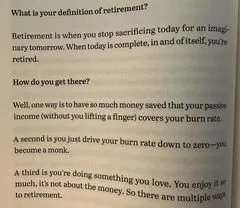
What Is Your Definition Of Retirement?

How Often Do You Look Back On Your Life And Think “I Wish That I Knew Than What I Know Now?”
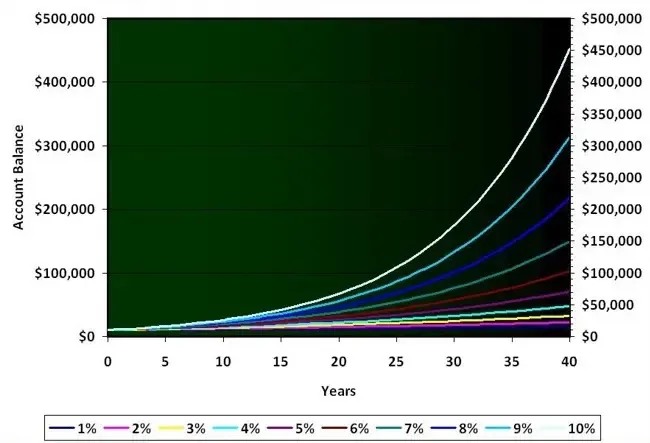
Can I Invest In My ISA For Passive Income?

The Role Of Luck In Investing

DENTISTS WHO INVEST LIMITED IS A LIMITED COMPANY, REGISTERED IN ENGLAND AND WALES